
Arrest Warrants in Gillespie County
Under Texas Code of Criminal Procedure Chapter 15, an arrest warrant is a written order from a magistrate. Which court issues it in Gillespie County depends on the charge and the jurisdiction: district, county-level, JP, or municipal. The Sheriff's Office can often verify a question or route you to the right place, though it no longer posts a local online warrant list. So the fastest first move is to find the court named on your citation, notice, or case file. That name tells you who to call. If the court is unclear, call GCSO at 830-997-7585 or public safety dispatch at 830-990-8793, option 4. Either number can steer you to the issuing court. Confirm status there before you act on an old document.
Gillespie County Arrest Warrant Complaint Route
Every Gillespie County arrest warrant starts with a complaint or affidavit presented to a magistrate or court under the applicable law. The judge weighs the legal requisites and the probable-cause framework before issuing process. That is the court's role; it does not tell you how any particular case will turn out, and a name match alone proves nothing about an order's validity. The statutes set the ground rules. Texas Chapter 15 covers general arrest-warrant requisites, presentment, and execution, while Chapter 45A provides the lower-court framework for JP and municipal cases. The court named in the file controls the case-specific record and any next appearance, so that is where case questions go. The statutory text is available from the Texas Legislature. Read Code of Criminal Procedure Chapter 15.
What a Gillespie County Arrest Warrant Contains
The historical Gillespie County report does not show a complete arrest-warrant instrument. Its four columns were Defendant Name, Issue Date, Warrant Number, and Degree/Offense. No judge, affidavit, bond, serving officer, active status, or recall field appears in it. Ask the issuing clerk which copy exists and what legal limits apply. Article 15.26 governs access to an executed warrant and its affidavit once the clerk makes a copy, subject to exceptions and redactions.
| Issuing court | Not a column in the historical report; confirm with the clerk. |
|---|---|
| Issue date | Does not prove current status. |
| Offense / degree | Combined historical field without a local legend. |
| Bond and status | Not exposed by that report. |
Gillespie County Officers Serve Warrant Process
Who actually serves warrant process in Gillespie County? A Sheriff's deputy, a constable, or another authorized peace officer may carry it out, depending on the instrument and the assignment. The county's Constables page describes warrant and civil-paper service along with the JP bailiff role. The Sheriff's page covers court security, patrol, service of process, and jail duties. Neither one publishes a warrant-service roster, and neither claims every warrant belongs to a single Sheriff unit. For a question about a specific order, verify with GCSO and the issuing court, since the assignment can depend on where and how the process is served. FPD's investigative page describes its search-warrant role. See the official division information.
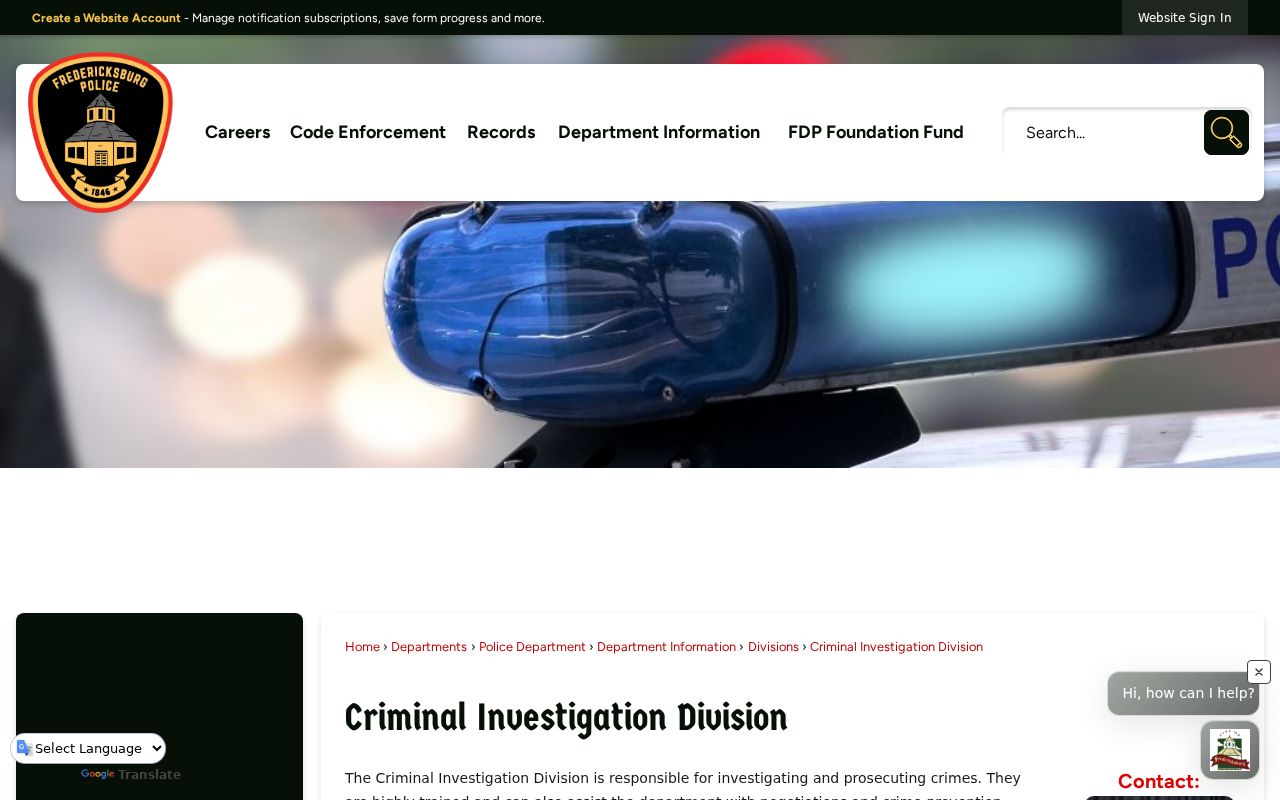
The city page discusses investigations and tips; it is not a public warrant roster.
How Gillespie County Arrest Warrants Are Served
Once an officer executes an arrest warrant, Texas law provides for presentment before a magistrate. The schedule, the location, and any release condition depend on the case and the court. Gillespie County publishes no universal booking or surrender timetable. The county warns residents plainly: do not approach, detain, or apprehend a person. For an urgent emergency, call 911. For a non-emergency warrant question, use the published Sheriff or dispatch route and ask what the official procedure is. The county's Support Services page lists jail and bond information for people in custody and the families waiting on answers. Review the official Support Services instructions.
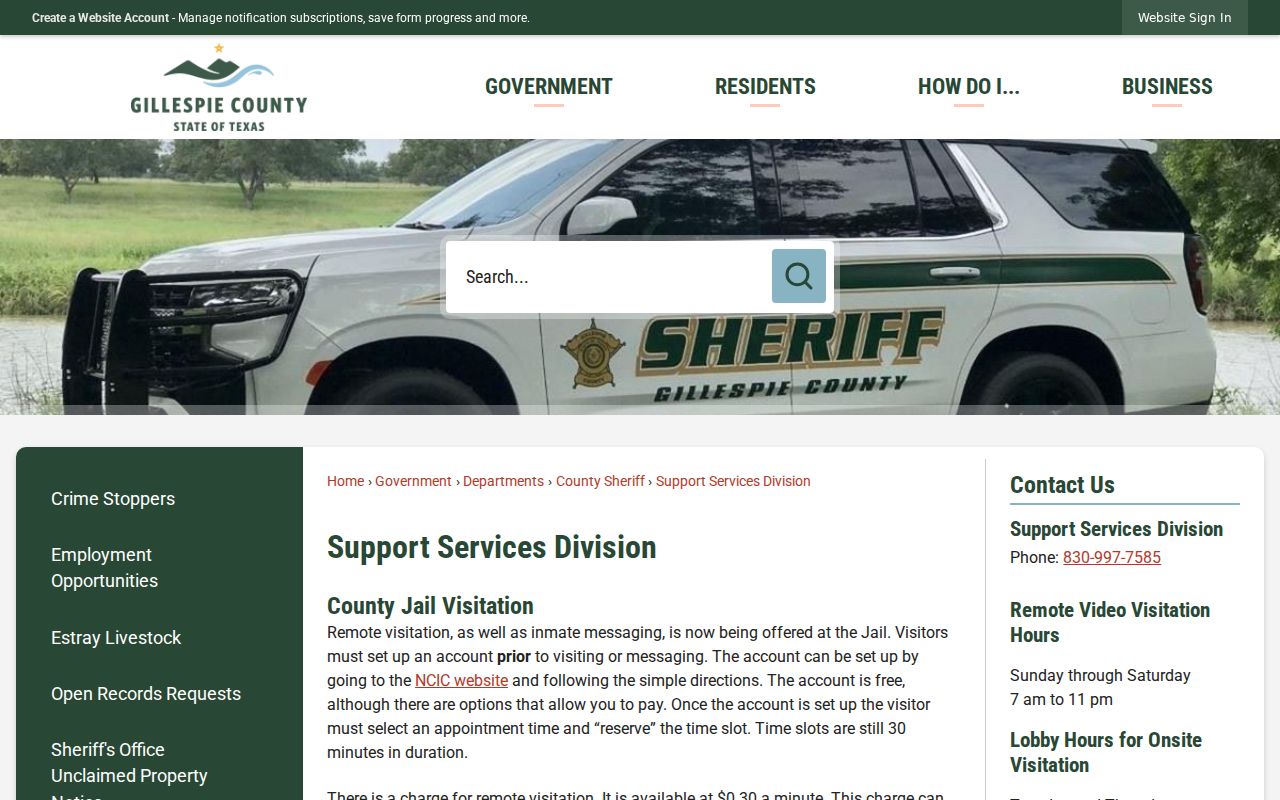
The displayed visiting hours are for visitation only; they do not set bond-window hours.
Gillespie County Jail Bond Rules
Bail rules at the Gillespie County jail are specific. For a person already in custody, the Sheriff's page says the office accepts bail. Support Services adds that a full cash bond must be paid by cashier's check or money order payable to Gillespie County Sheriff's Office, with valid ID presented. Cash, traveler's checks, and personal checks are not accepted for that transaction. What the instructions do not say is whether every warrant allows a cash bond, and there is no published bond-window schedule or universal surrender desk. So call the Sheriff before traveling. Ask which court set the condition, what amount applies, and what happens after payment. Note too that posting bond does not by itself close the case; the issuing court controls what comes next.
Keep the steps distinct: bond may address release from custody, while the issuing court still controls the case, hearing, and any warrant recall.
Gillespie County Arrest Warrant vs Summons and Bench Warrant
A summons or citation directs someone to respond or appear. A bench-style warrant may follow a missed court obligation. An arrest warrant follows the legal process for taking a person into custody. These labels are not interchangeable, and treating them as one result type leads people wrong. The court and the document answer the practical question. Gillespie County's old PDF does not include a reliable instrument or current-status field, so ask the clerk what was issued and what action is due.
| Process | Purpose | First question |
|---|---|---|
| Summons or citation | Notice to respond or appear | What is the deadline and court? |
| Bench-style process | Response to missed court duty | Is a new appearance required? |
| Arrest warrant | Order authorizing custody | Which court issued it and what is required? |
Gillespie County Executed Warrant Records
For an existing executed-warrant record, Article 15.26 provides a public-information rule once execution is complete and the clerk has copied the file. That rule has limits; it does not open every affidavit or active investigative file. GCSO states that open cases and investigations will not be released through its request process. A written request should identify the court or agency, the date, the record type, and the case number if known, and you should expect redactions. Keep in mind that a records request returns existing records; it will not generate an active-status search or a newly created report. Direct status questions to the issuing court.
Privacy boundary: Juvenile records, protected identifiers, sealed material, and some law-enforcement information may be withheld or redacted under Texas law.
Gillespie County Search Warrants Are Different
A search warrant and an arrest warrant do different jobs. One authorizes officers to enter and search a place or property. The other puts a person in custody. In Gillespie County, search warrants follow Texas Code of Criminal Procedure Chapter 18. JP1 and FPD both describe that search-warrant work, though neither office posts a public search-warrant registry. So a person-warrant question is the wrong way to request an unlisted property search or investigation. The issuing agency can explain what record, if any, may be requested after execution, subject to the rules on open investigations and protected material. Read the statutory chapter. Federal matters sit on a separate track. Gillespie County falls within the Western District's Austin Division context, and federal dockets and service do not run through the county Sheriff. The U.S. District Court lays out that division structure. Review the Western District information.
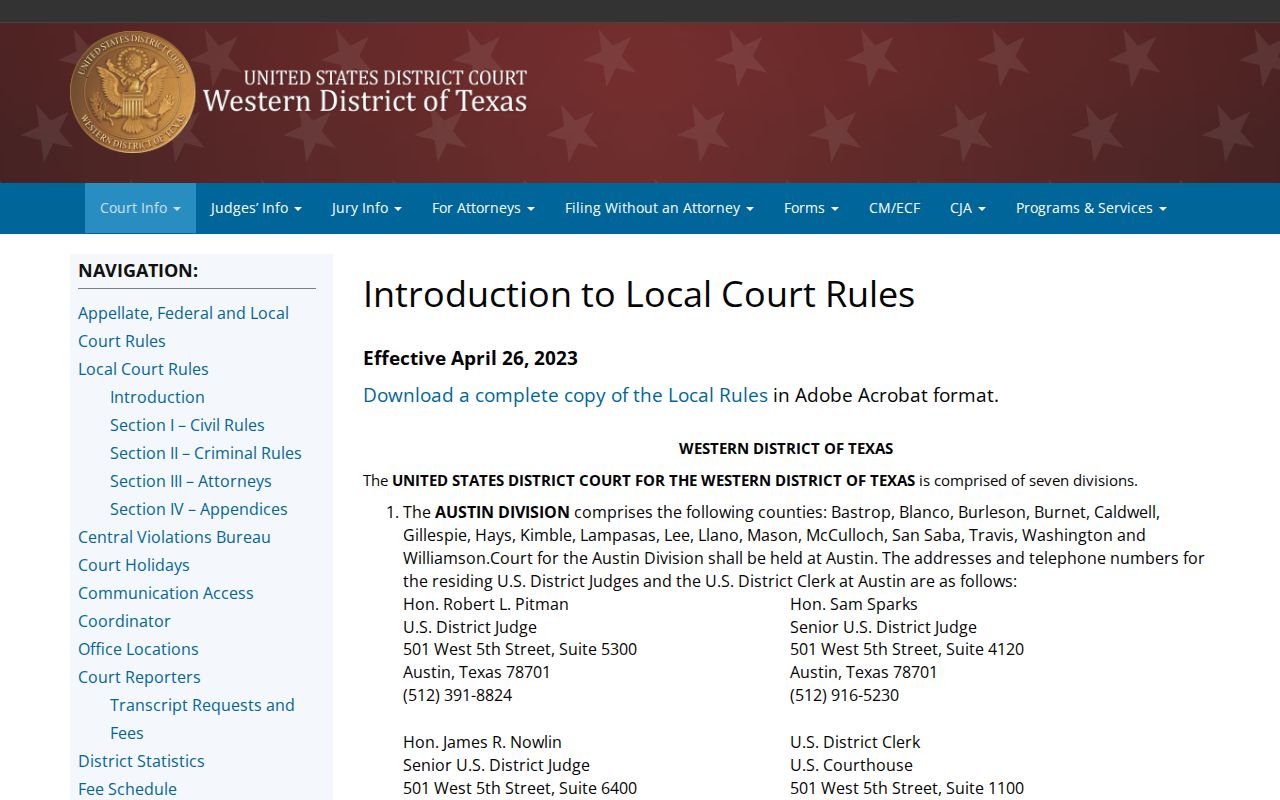
A federal court reference cannot confirm a Gillespie County or municipal warrant. See the PACER fee information. It spells out how federal docket access charges work.
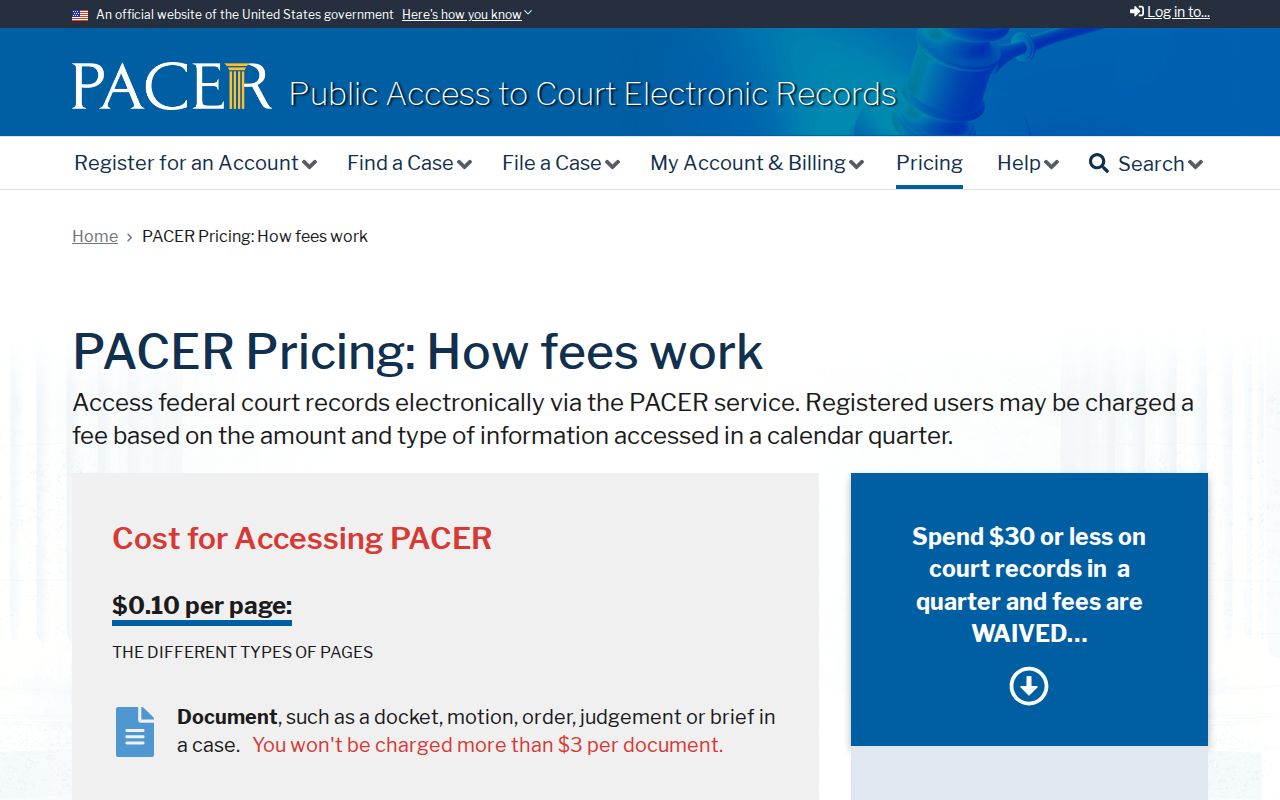
Federal docket charges concern federal records access, not a county warrant-status fee.
What to Do If There Is a Warrant for You
Call the issuing court or GCSO before you travel. Ask the clerk to confirm the type of process, whether an appearance is required, what bond option exists, and whether counsel should contact the court. Gillespie County publishes no local recall form or walk-in surrender schedule. Keep the answer, plus any receipt or court order. Ask when the court will update its own file, and whether another office must be contacted too. Remember that payment, release from custody, and recall of a warrant can each be separate steps.
Do not approach another person or attempt self-help. Gillespie County directs residents to verify every warrant with GCSO before any apprehension.
The Gillespie County warrant overview lists the local Sheriff and court contacts for a current warrant question.